Will You Go to Hell for Disagreeing with St. Alphonsus on a Moral Issue? Correcting a Common Myth
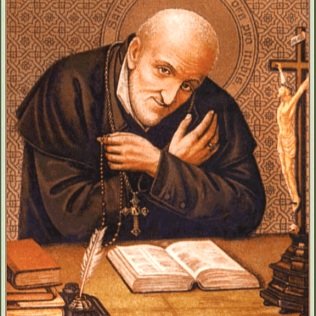
In this article, we debunk a common myth circulated by certain voices online which states that disagreeing with Alphonsus on a matter of marital chastity necessarily puts your soul in jeopardy.
Whenever it is brought to our attention that a couple positions our Apostolate takes on marital chastity diverge somewhat from St. Alphonsus Liguori, an argument often used by such people is that the Church under Pope Gregory XVI has declared that all of Alphonsus’ moral opinions are “safe” and for that reason it would be “unsafe” to present any perspective that diverges from that of Alphonsus. While we at the Apostolate greatly admire the work of this holy Doctor of the Church and have appealed to his writings before (for instance, to defend the moral legitimacy of couples enjoying incomplete expressions of sexual pleasure outside the marriage act), it is important the Gregory XVI’s decree be read in its full context. Herein lies a layer of nuance that should make it clear that merely diverging from an opinion of Alphonsus should by itself raise no cause for concern:
Declaration of the Safety of The Teachings of St. Alphonsus Liguori
May a professor of sacred theology safely hold and teach the opinions that Blessed Alphonsus Liguori teaches in his moral theology?
Or should a confessor who follows all the opinions of Blessed Alphonsus Ligouri in the practice of the tribunal of holy penance be disturbed for the sole reason that the Apostolic See has found nothing deserving of censure in his works? The confessor, in regard to what is in doubt, reads the works of the Blessed Doctor only to know his doctrine, accurately, without weighing the sources or reasons that support these various opinions; but he judges that he conducts himself in a safe manner because he can reasonably judge that a doctrine that contains nothing worthy of censure would be safe and sound and in no way contrary to the holiness of the Gospel.
Response (confirmed by the supreme pontiff on July 22, 1831):
To 1: Yes, yet those who follow the opinions handed down by other approved authors should not be considered blameworthy.
To 2: No, taking note of the reasoning of the Holy See regarding the writings of the servants of God in the process of canonization. [1]
Our comments:
It is clear from the declaration and subsequent papal appraisals that the Church sees St. Alphonsus Liguori as a great Doctor of the Church. Such a great doctor of the Church was he that he has been declared the patron Saint of moral theologians and that the Church has deemed his opinions safe to follow. At the Apostolate for Marital Intimacy, we are grateful for his contributions to moral theology and to the theology of marriage and sexuality. He was a primary contributor to a time period that is considered a golden age of moral theology, in which the theologians began to see the other ends of the marital act besides procreation in a more positive light. At AMI, we greatly appreciate and benefit from the work of St. Alphonsus Liguori.
At the same time, we have seen certain people on the internet use St. Alphonsus to argue for a couple positions that we do not agree with, and the fact that the Church has made this declaration regarding his work is almost always invoked as the foundation of the argument. This is primarily the case with those who argue that Catholic spouses cannot engage in oral stimulation as foreplay to prepare for the marital act. St. Alphonsus taught explicitly that a husband putting his penis in the mouth of his wife is a mortal sin, therefore, since he taught it, then oral stimulation, even as foreplay, must be forbidden. “St. Alphonsus says so” is one of the arguments made by those who support this position, and it may even be their best argument. However, we disagree with this conclusion for a number of reasons.
First, the declaration that the opinions of St. Alphonsus are “safe” does not mean that they must be believed by all Catholics. This is evident in the declaration itself, which states that “those who follow the opinions handed down by other approved authors should not be considered blameworthy.” Second, this declaration has not been reaffirmed by Church authorities recently. The recent popes have praised him and said many other things about him, but they have not restated the particular point that whatever he taught can be believed simply because he taught it. Further, on the particular point of oral stimulation, the Magisterium has not issued its own independent teaching condemning the practice, and the consensus of the moral theologians in the 20th and 21st centuries do not take the same position on this question as St. Alphonsus does on this question. Feel free to examine the opinions of these moralists through our Compendium. It should also be pointed out that when understood in historical context, the fact that St. Alphonsus’ moral opinions were declared “safe” essentially means that no penitent will be led into grave sin by following his counsels and judgments. This intervention was needed at the time so as to fend off those who considered Alphonsus’ probabilism to be too lax or prone to lukewarmness. In light of all this, it should be clear that the mere invocation of St. Alphonsus Liguori as an argument for why Catholics should take the same position as him on this or other issues is not a convincing argument and it is clear that Catholics do not have to agree with him on everything even if it is considered safe to do so at one time. Many approved authors since then have taken different positions than him, and we have documented this in our compendium of moral theologians by being the first ones to translate some of these texts into English. You can access this document by supporting us on Patreon.
Footnote:
Response of the Sacred Penitentiary to the Archbishop of Besancon, dated July 5, 1831, numbered 2725-2727
Want More Content Like This?
Sign up to get The Catholic Marital Intimacy Blueprint. Plus, if you sign up for SMS, you'll get our Yes, No, Maybe sexual exploration guide for Catholics for FREE! We respect your privacy and will never sell your information.
Get the Blueprint