One Faith, One Flesh: The Holy Fathers of Nicaea and Spiritual Intimacy in Marriage
Overview
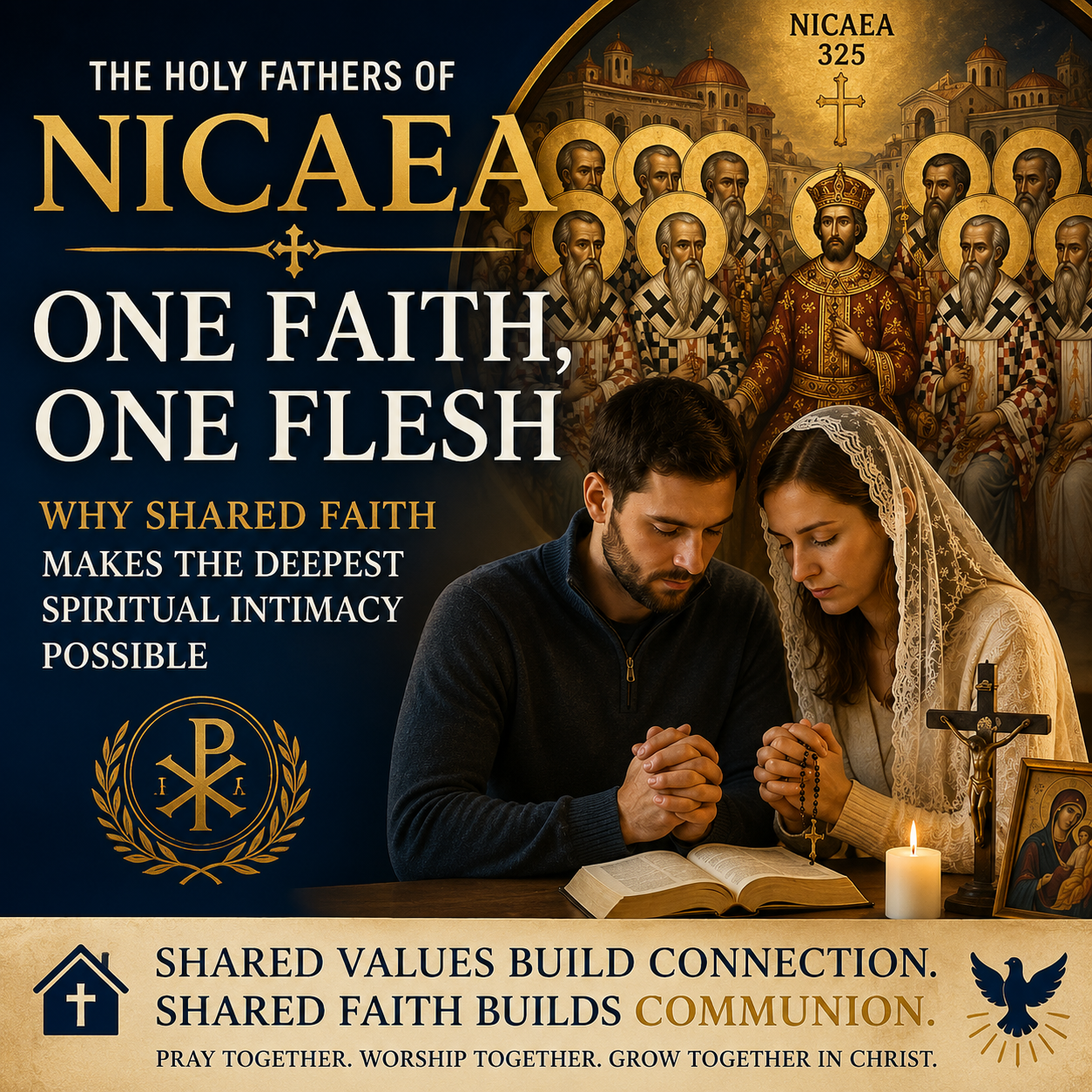
This Sunday, Byzantine Catholics commemorate the Holy Fathers of the First Ecumenical Council of Nicaea, who defended the truth of the faith in order to preserve authentic Christian unity. Their witness reminds us that deep communion requires shared truth, both within the Church and within marriage. While couples of different beliefs can build strong marriages through shared values and mutual love, the fullest spiritual intimacy becomes possible when husband and wife fully share the Catholic faith, pray together, and pursue holiness side by side. As the Church prepares for Pentecost, couples are invited to seek greater unity in their homes through shared prayer, worship, and openness to the Holy Spirit.
This Sunday, Byzantine Catholics commemorate the Holy Fathers of the First Ecumenical Council of Nicaea. Nearly seventeen centuries ago, bishops gathered to defend the truth about Our Lord Jesus Christ against confusion and false teaching. The Council was not merely about abstract theology. It was about communion.
The Fathers understood something modern Christians often forget: unity cannot survive without truth.
The Church could not remain united while divided about who Christ truly is. So the Fathers defended the faith handed down by the Apostles and gave us the Nicene Creed, which Catholics still profess every Sunday.
Marriage reflects this same reality in miniature.
A husband and wife may share a home, children, responsibilities, affection, and years of life together. Yet spiritual intimacy requires more than proximity or emotional closeness. It requires a shared understanding of God, truth, prayer, sacrifice, and holiness.
Shared values can build meaningful connection. Shared faith makes deep spiritual communion possible.
Many couples today build strong marriages around shared virtues and goals. Even in mixed-faith marriages, spouses may sincerely love one another and pursue lives marked by fidelity, generosity, discipline, and devotion to family. These shared values matter greatly. They help sustain trust, cooperation, and stability within the home.
Yet there remains a difference between moral agreement and full spiritual unity.
A husband and wife cannot fully share spiritual intimacy while walking toward different understandings of God, worship, salvation, or the meaning of the Christian life. One spouse may desire prayer together while the other feels uncomfortable with it. One may long for shared sacramental life while the other remains distant from the Church or uncertain in belief. These differences create real limitations within the spiritual life of the marriage, even when love remains sincere.
Many faithful Catholics quietly carry this sorrow. They deeply love their spouse, yet long to kneel beside them in prayer, receive the sacraments together, or fully share the life of faith. The Church does not ignore this pain. She calls spouses in these situations to perseverance, gentleness, patience, and hope.
The Fathers of Nicaea remind us that authentic communion requires shared truth. This applies within the home as well as within the Church.
When husband and wife fully embrace the Catholic faith together, a unique form of intimacy becomes possible. They worship together. They confess the same Creed. They understand marriage through the same sacramental vision. They encourage one another toward holiness and eternal life. Their union becomes not merely emotional or practical, but profoundly spiritual.
This is one reason the Church calls the family a domestic church.
The timing of this feast is especially fitting. We stand between Ascension and Pentecost. After Our Lord ascended into heaven, the Apostles gathered together in prayer while awaiting the coming of the Holy Spirit. The Church was united in faith before Pentecost descended in power.
Catholic homes should imitate this posture.
A strong marriage is not built merely by avoiding conflict or maintaining routines. It grows when husband and wife seek the Lord together. Spiritual intimacy deepens through shared prayer, shared worship, shared repentance, and shared pursuit of holiness.
This week, consider praying the Nicene Creed together slowly and attentively. Reflect on what it means to profess one faith as one family. Ask the Holy Spirit to increase unity within your home and draw your marriage more deeply into the life of Christ.
The Fathers of Nicaea defended the truth because truth protects communion. In marriage, the fullness of shared faith does not weaken intimacy. It makes the deepest intimacy possible.
Want More Content Like This?
Sign up to get The Catholic Marital Intimacy Blueprint. Plus, if you sign up for SMS, you'll get our Yes, No, Maybe sexual exploration guide for Catholics for FREE! We respect your privacy and will never sell your information.
Get the Blueprint