Excerpt from The United States Catholic Catechism for Adults: The Love of Husband and Wife (p.408-410)
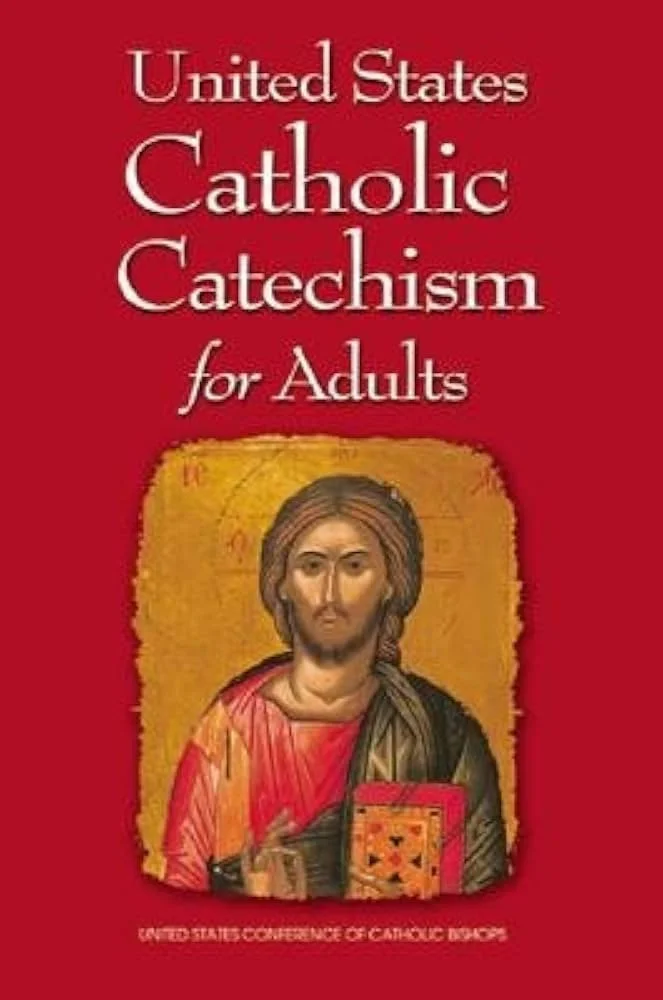
One valuable but perhaps less known and less used catechetical resource in the United States is the United States Catholic Catechism for Adults. This document was produced and approved by the United States Conference of Catholic Bishops and it received a recognitio from the Holy See. Since it is an authoritative but perhaps less well known document, we thought it would be worthwhile to include segments from this catechism. The following excerpt is important because it offers an official explanation of the unitive and procreative ends of marriage and the marital act. This is worth sharing because there are people online who have expressed confusion and/or taken issue with the language of the “unitive end” of marriage and the marital act since the language of the “inseparable unitive and procreative ends” became the normative language of the magisterium when speaking about marriage and the marital act. However, if we are going to think with the mind of the Church, we must be willing to speak its language in its preferred terms. This United States Catechism provides an authoritative explanation of the unitive and procreative ends.
THE LOVE OF HUSBAND AND WIFE
The spouses’ union achieves the twofold end of marriage: the good of the spouses themselves and the transmission of life.
—CCC, no. 2363
The bond between husband and wife is both conjugal and procreative. Conjugal mutual love and fidelity is the unitive aspect of marriage. The procreative aspect of marriage concerns the conception, birth, and education of children. The bond between the unitive and procreative may not be broken.
Unitive Faithful Love
The unitive aspect of marriage involves the full personhood of the spouses, a love that encompasses the minds, hearts, emotions, bodies, souls, and aspirations of husband and wife. They are called to grow continually in unitive love and fidelity so that they are no longer two but
one flesh. Their mutual self-giving is strengthened and blessed by Jesus Christ in the Sacrament of Matrimony. God seals the consent that the bride and groom give to each other in this Sacrament.
“The acts in marriage by which the intimate and chaste union of the spouses takes place are noble and honorable; the truly human performance of these acts fosters the self-giving they signify and enriches the spouses in joy and gratitude.” (CCC, no.2362, citing GS, no. 49)
Acceptance of a spouse’s faults and failures as well as of one’s own is a recognition that the call to holiness in marriage is a lifelong process of conversion and growth.
Procreative Love
God calls the married couple to be open to children, remembering always that having a child is not a right, but rather a gift from God (cf. CCC, no.2378). In this way, they share the creative power and fatherhood of God. In giving birth to children and educating and forming them, they cooperate with the love of God as Creator. Marital love by its nature is fruitful.
The marriage act, while deepening spousal love, is meant to overflow into new life. Families are images of the ever-creative power and life of the Holy Trinity and the fruitfulness of the relationship between Christ and his Church.
Respecting the Link of Fertility and Love
“A child does not come from outside as something added on to the mutual love of the spouses, but springs from the very heart of that mutual giving, as its fruit and fulfillment. So the Church, which is ‘on the side of life’ teaches that ‘it is necessary that each and every marriage act remain ordered per se to the procreation of human life’” (CCC, no.2366, citing FC, no. 30, and HV, no. 11, respectively). This passage underlines the Church’s teaching that God established an inseparable bond between the unitive and procreative aspects of marriage. Each and every sexual act in a marriage needs to be open to the possibility of conceiving a child. Thus, artificial contraception is contrary to God’s will for marriage because it separates the act of conception from sexual union. Efforts to achieve pregnancy outside of the act of sexual intercourse (e.g., in vitro fertilization) are morally wrong for the same reason—they separate conception from sexual intercourse. Contemporary methods of natural family planning are making it possible for couples, in cases of legitimate need, to space the births of their children while remaining faithful to God’s plan for marriage. These methods allow a couple to have a more precise knowledge of the time of ovulation to enable them to either avoid or achieve a pregnancy. “The regulation of births represents one of the aspects of responsible fatherhood and motherhood. Legitimate intentions on the part of the spouses do not justify recourse to morally unacceptable means (for example, direct sterilization or contraception)” (CCC, no. 2399). In the course of their marriage, couples may, for serious reasons, decide to avoid a new birth for the time being or even for an indeterminate period, but they must not use immoral means to prevent conception. Couples should also be mindful of the fact that their love is expressed in more ways than just the conjugal act. Abstaining from intercourse at certain times can be an act of sacrifice which gives rise to a deeper relationship.
“In relation to physical, economic, psychological and social conditions, responsible parenthood is exercised either by the thoughtfully made and generous decision to raise a large family, or by the decision, made for grave motives and with respect for
the moral law, to avoid a new birth for the time being or even for an indeterminate period.” (HV, no. 10)
Want More Content Like This?
Sign up to get The Catholic Marital Intimacy Blueprint. Plus, if you sign up for SMS, you'll get our Yes, No, Maybe sexual exploration guide for Catholics for FREE! We respect your privacy and will never sell your information.
Get the Blueprint